May 2025 | Package Installation

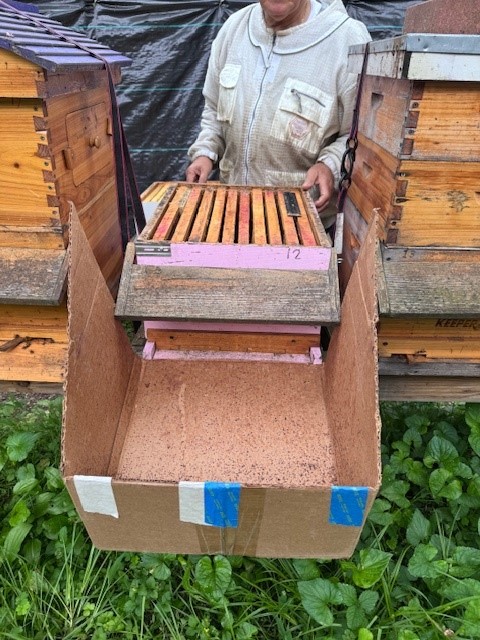
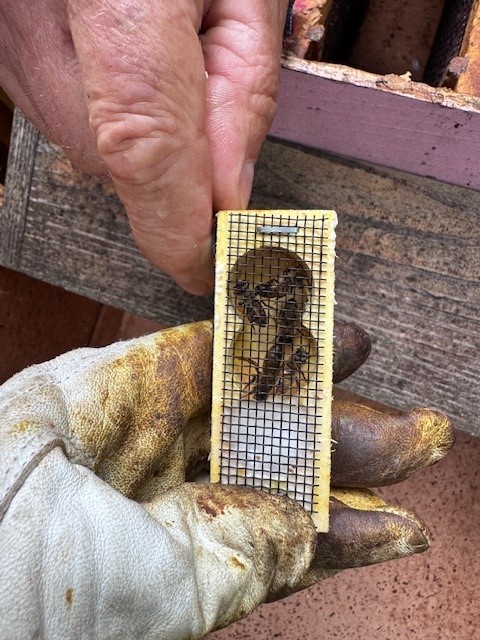
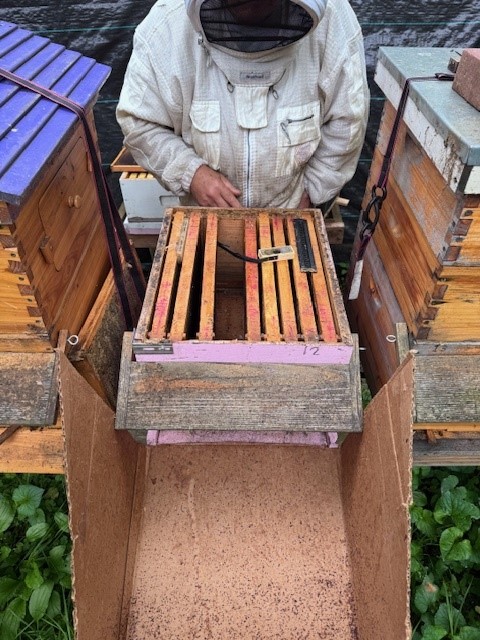
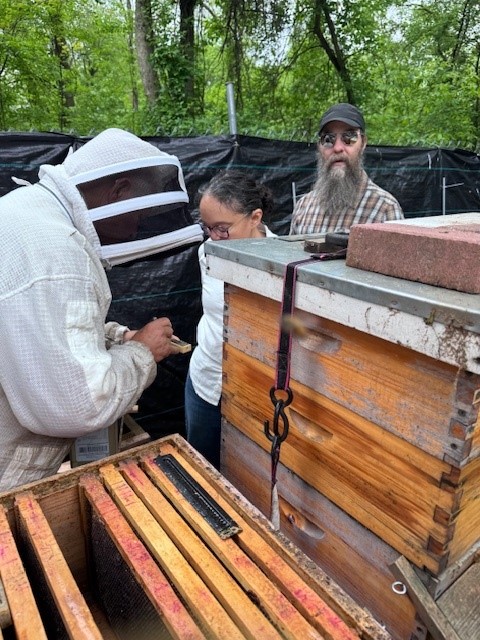
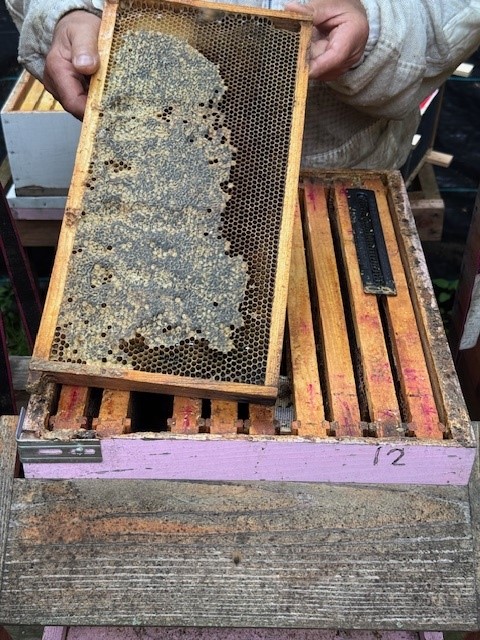
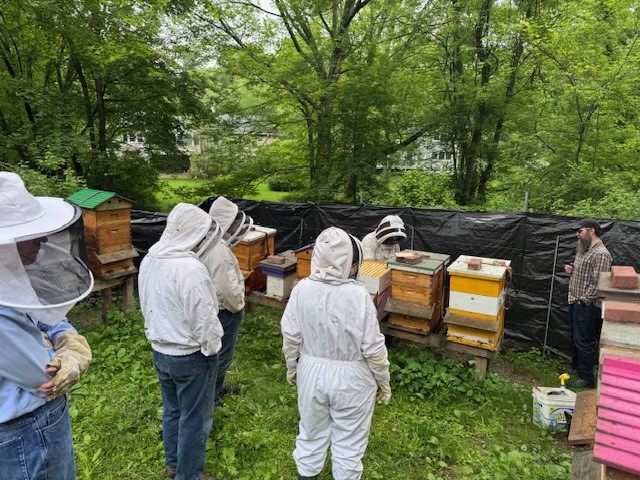
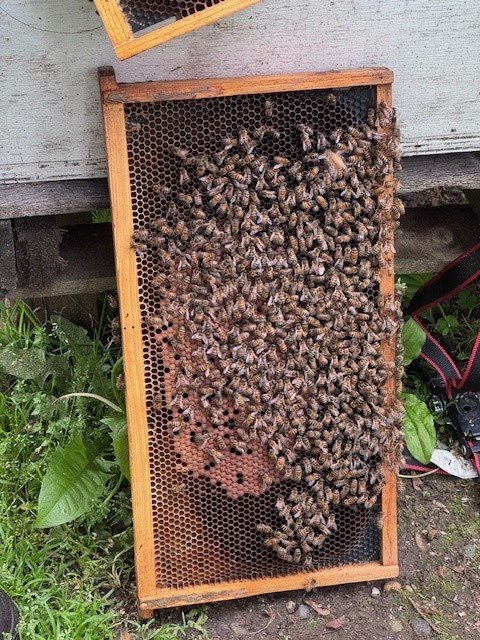
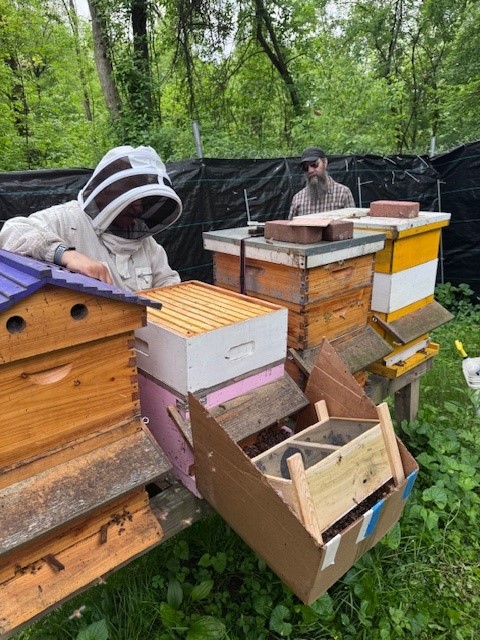
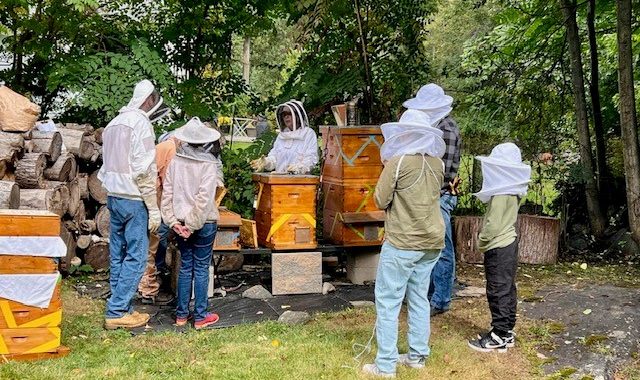
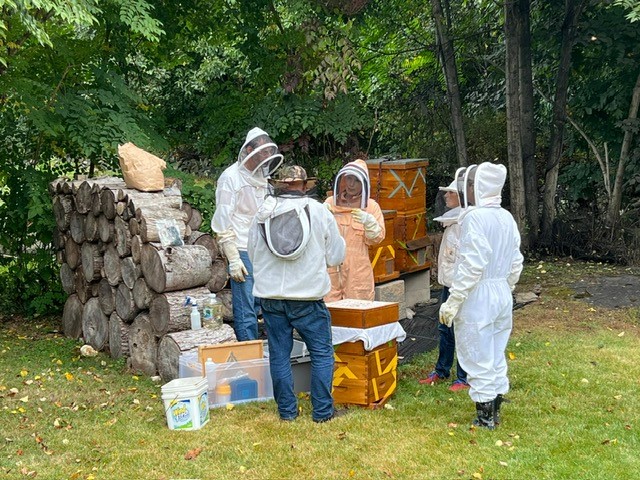
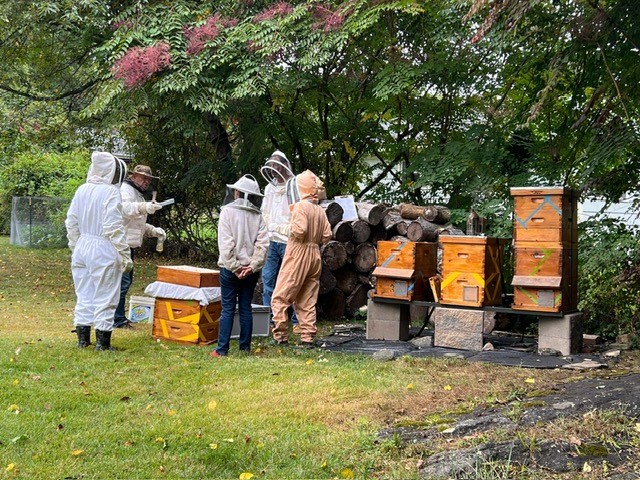
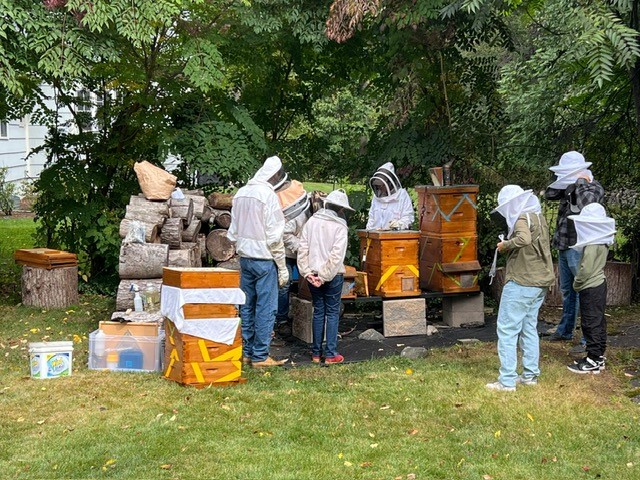
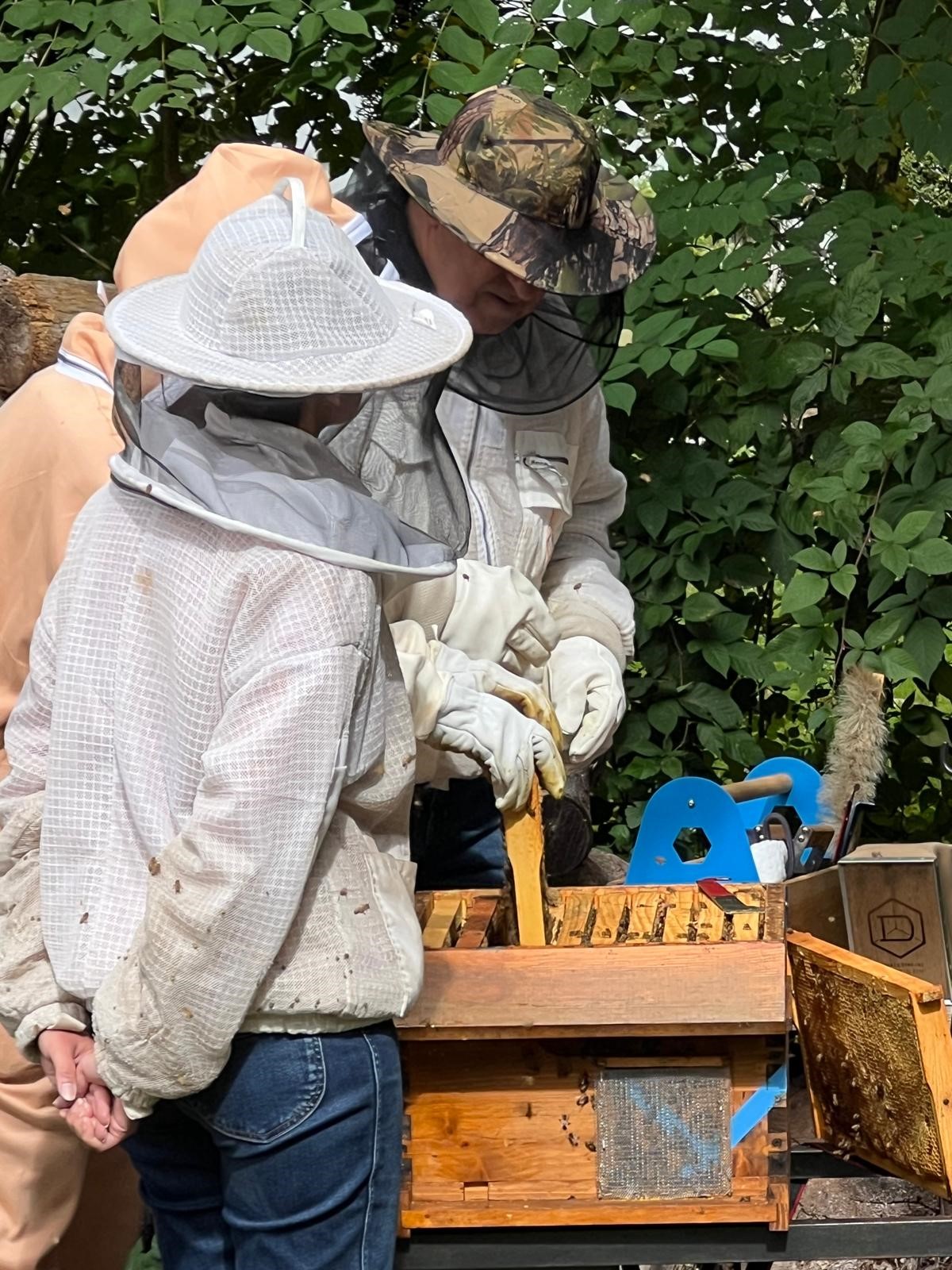
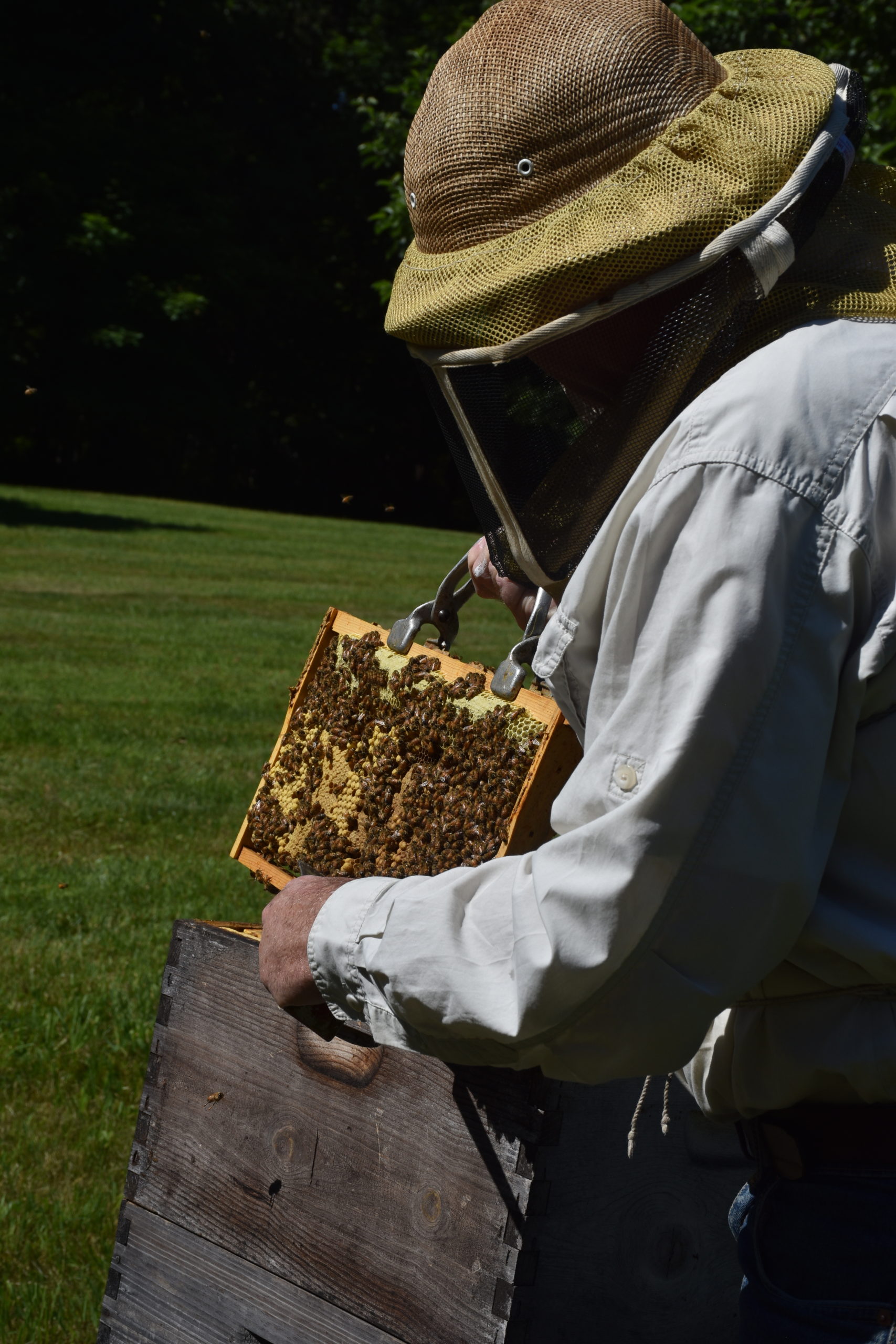
Sante once again welcomed us to his fantastic beeyard. He also experienced quite a few deadouts over the winter and showed us how he installs a package of bees. One particularly interesting feature is the setup in front of the hive — after shaking most of the bees into the box, he places the package in front of the entrance so the remaining bees can walk in on their own. The advantage: dead bees are left behind.

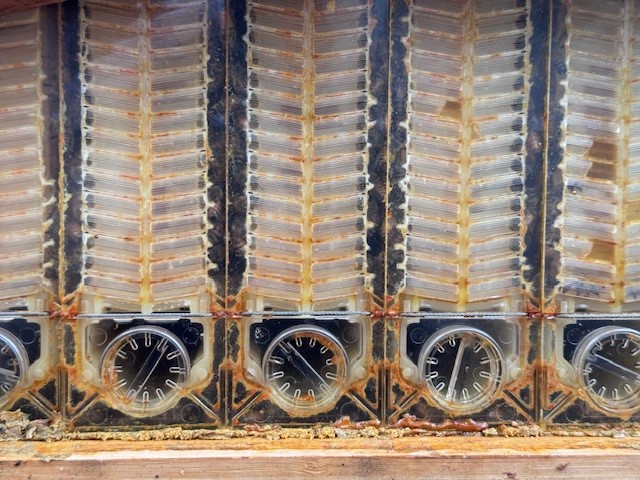
We also took a close look at the Flow Hives with great interest — maybe there’ll be a meeting one day where we get to see the Flow Hive in action…

Winter 2024 | Winter prep, storage, bee stuff

The final meetings are taking place: Do the bees have enough winter stores? What’s the mite count? Do I need to treat? Should I add insulation? — So many questions, especially if you’re new to beekeeping.

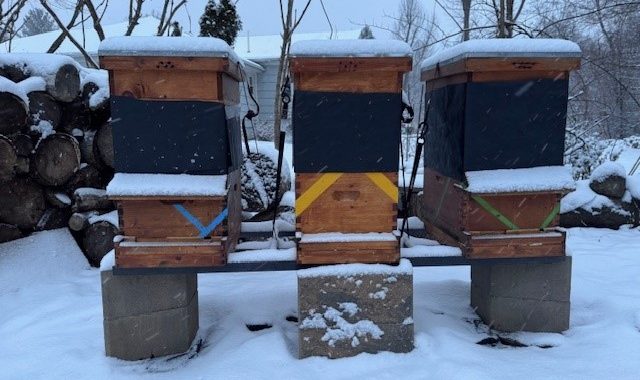
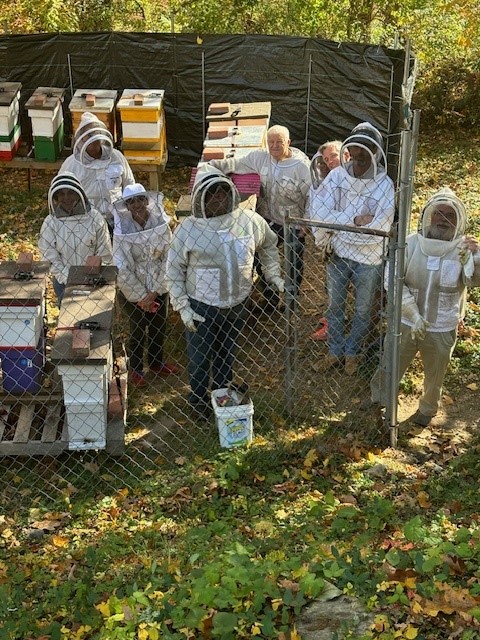
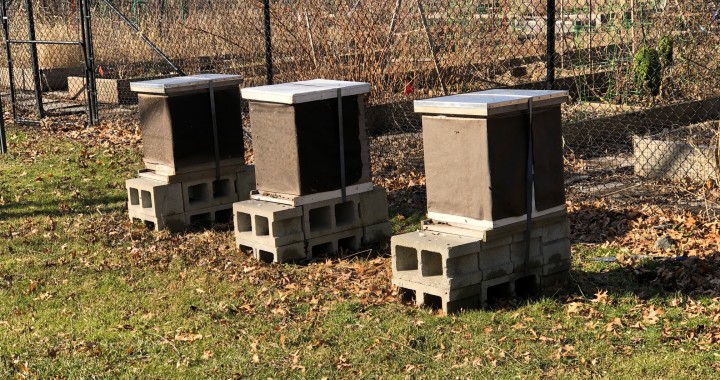
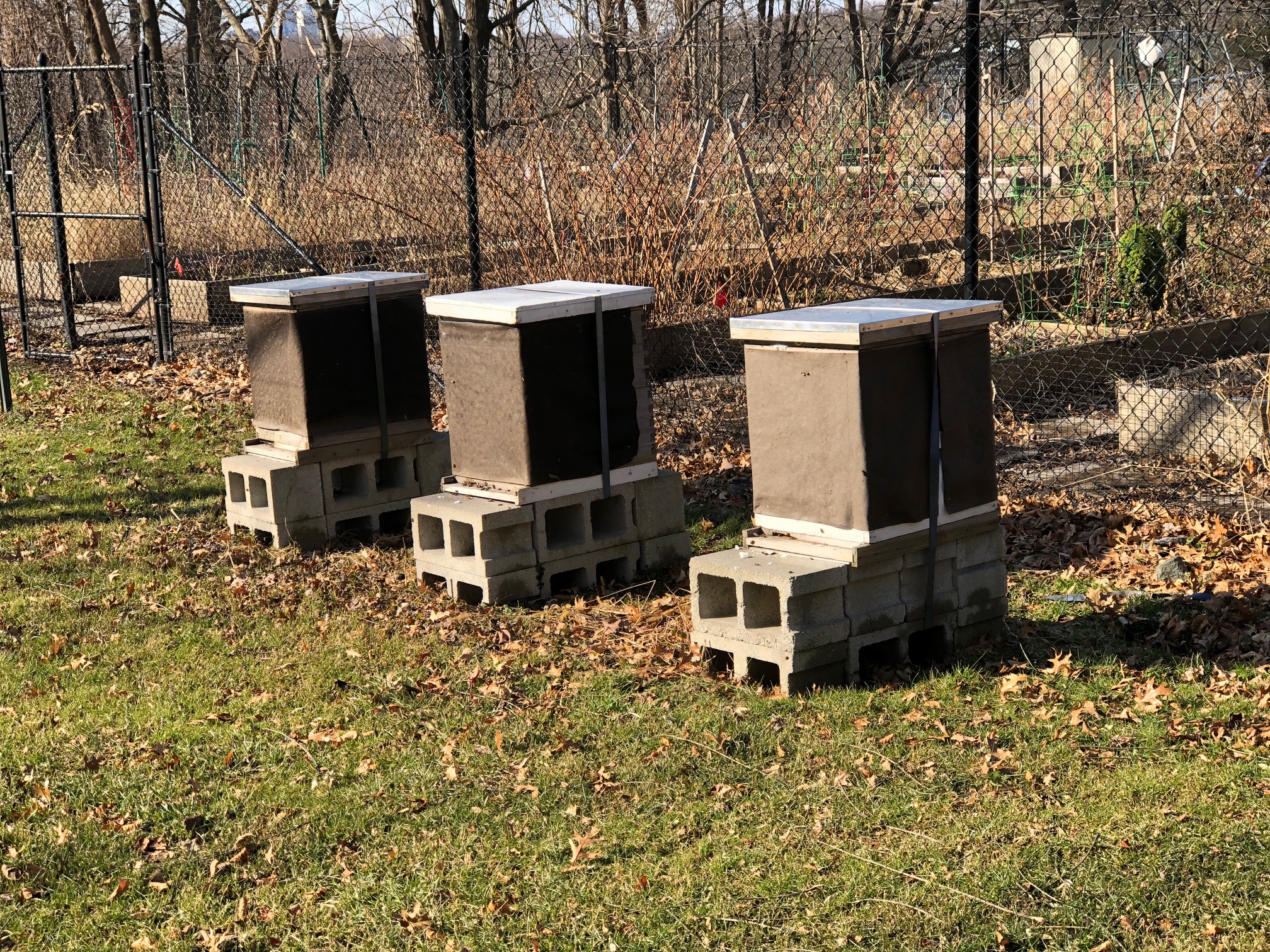
Sante is a very experienced beekeeper. He showed us how he insulates the hives using the inner cover, and how he treats with oxalic acid. Feeding is still done with syrup; when it gets colder, he switches to fondant or sugar dough.

As a general guideline: oxalic acid treatment is typically done around Thanksgiving, once the first night frosts have hit and the queen has stopped laying (ideally).

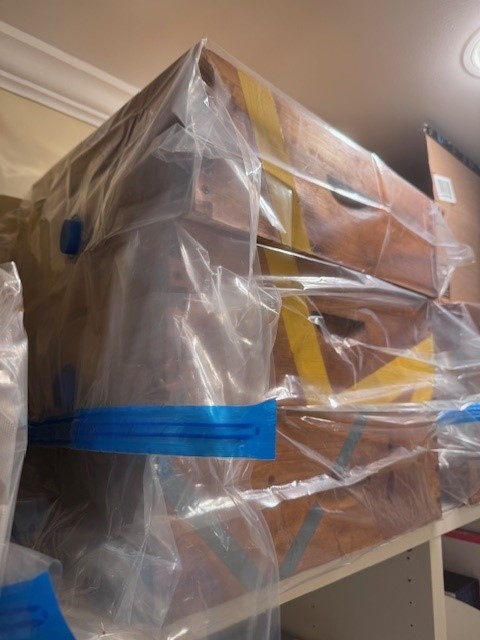
Also attached is an idea for storing honey supers: I froze them for 2–3 days and then sealed them in vacuum bags. Over the winter, it’s a good idea to check on them occasionally to make sure everything is still okay.

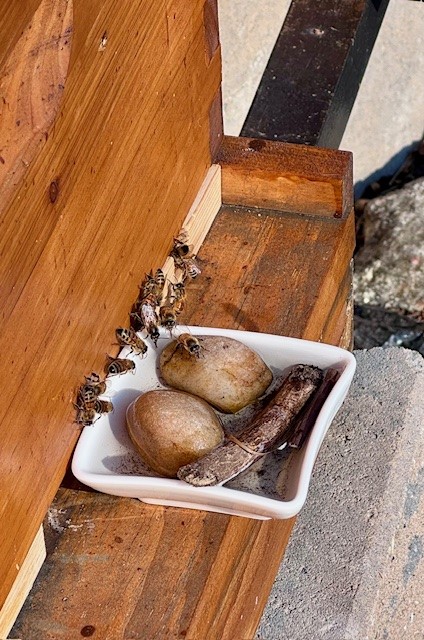
On a warm winter day, feel free to set out some water for the bees — they’ll gladly take it.

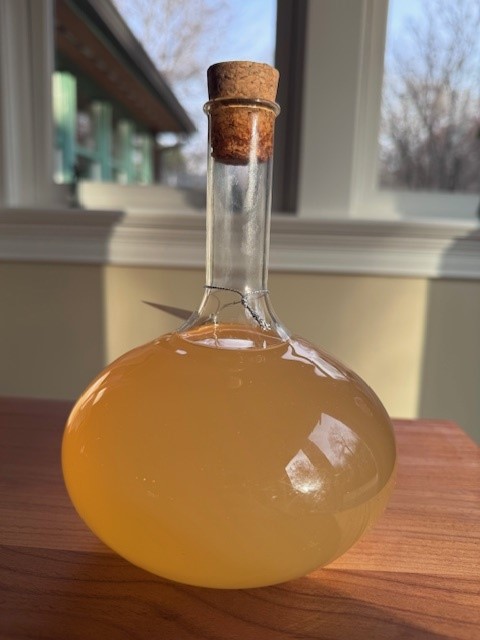
Now it’s slowly time to turn the wax into candles or creams — and who knows, maybe someone’s up for making a batch of honey liqueur?

2024 | September – What’s next after honey harvest?

After the honey harvest, the season’s over? Well, not quite — the winter prep season is just beginning: the bees need to be fed, treated for mites, and protected from robbing (that’s what the little square at the entrance is for). Good thing if you already let them clean out the empty honeycombs earlier — it would be tricky to do that now.
Meeting in Hartsdale at Julie’s, NY.

2024 | July – Family event honey extraction

Extracting honey can be a fun and educational event for family and friends. After taking a look at Eric’s professional way of extracting honey, here’s how backyard beekeepers extract honey.
Feel free to send us photos of your harvest. We can show them in one of the next posts here! Contact us.

How to remove bees from honeycombs?

There are several bee escapes (diamond, triangle) that you can buy or quickly build yourself that will empty the honey supers from bees over night.

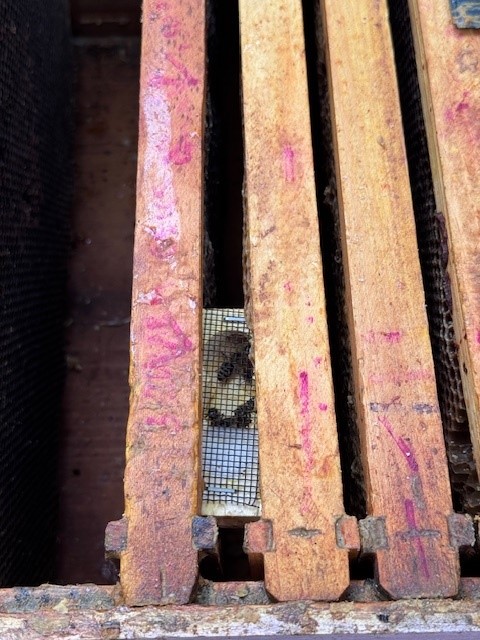
DIY bee escape: the space between the slats is approximately 0.4 inches. The slats are also about 0.4×0.4 inches. Then you only need a fine grid and the bee escape is ready (photos attached). We had 5 bees left in the super after 12 hours. But keep in mind, they learn. If the bee escape is in the hive for too long, the bees could find their way back into the honey super.

How do I uncap the honeycomb?

If you just have a few hives, the uncapping knife and an uncapping fork will work great. You can consider placing the knife in hot water before each use. You will have a lot of uncapping wax. This wax is the purest and highest quality as it has not been in contact with the brood. I also recommend that no pesticides are used during the honey flow so that there are no residues in the wax.

Ever thought of making candles, furniture polish, lip balm, skin protection cream, shoe polish, wax cloths, propolis tincture – you name it!

Honey extraction

There is a refractometer which tells you how dry the honey is. Capped honey is usually ripe. Honey should have a maximum water content of 20%, ideally less than 17.5%. A higher water content can occur if some uncapped honey (nectar) is spun because not all the honeycombs have been capped. Honey with such a high water content can ferment.

We have a manual honey extractor for 3 frames and use wax foundations. Spin slowly and don’t go to high speed. Turn the combs. Now that some of the honey is out, you can spin fully. At the end, turn again and spin.

Check the tank from time to time as the honey may rise to the point where the frames are in the honey. Before this happens, it is advisable to drain the honey for the next spin.

Hygiene

Be careful not to leave honeycombs outside, as this can trigger robbery or other undesired guests.
Disinfect all utensils that will come into contact with the honey or boil them in water before use.
Remove wax residue with cold water, otherwise it will smear and leave a mess.

2024 | June Meeting – The Falaha Center

Aysha invidet us to see her beautiful homestead, the Falaha Center. She is in her 3rd year of beekeeping. We will be discussing hive set-up, hive inspections, do comments, critiques and just get together and talk about bees.

You can learn more about her center here.

2024 | February and March Meetings – Online

Since the bee season had not yet started, we met digitally in 2 online workshops in February and March and brought our knowledge together.

Winter prep

The final treatment against Varroa around Thanksgiving seems to be particularly important for the survival of bees in winter, as is feeding.

If you want to take an academic approach, weigh your equipment – I have also started doing this and will add my work-in-progress-list in the photo galery.

If the bees consumed around 6.6pd per month, you should feed 5.2gal from August to October. On warm winter days, you can use the weight check (tilt check) to determine how much feed has been consumed and feed more if it is really necessary.

Perhaps there is someone who would like to do this with me next winter. I’ll keep you posted.

Spring Clean-Up

Last but not least we talked about spring clean-up, especially removing old dark combs and varroa control with drone frames.

To do this, place an empty frame with a bar in the middle in position 3 (see picture) in the hive. This division will allow you to cut out the more developed comb sooner. Remember that mites prefer drone brood for egg laying. Forgetting to cut out the drone combs can significantly increase the Varroa population.

2021 | May Beekeepers Meeting

Andy will walk us through a hive split!

We hope you’ll join us for our next beekeepers meeting, Saturday, the 15th.

It’s on Zoom and live on Facebook, starting at 10:30am.

Abbott has volunteered to demonstrate hiving his new nucs and Andy and Eric will walk us through hive splits.

Thanks to Gabriella, we have a great event host and she will monitor the chat for questions to ask of our beekeepers.

We hope you’ll join us!

Best Laid Plans . . .

So we tried to be all organized and set up the year’s worth of Beekeeper meetings in advance.

We all know how that worked out!

Not to be deterred, we are going to have a ‘virtual’ beekeepers meeting using the Zoom platform.

See the details here.

We hope to ‘see you there’!

To get the full details, be sure to sign up for our email list and we’ll send out all of the information towards the end of the week.

Kick-off 2019 with HVNB!

Hives in WinterWe are excited to announce our first meeting of the Hudson Valley Natural Beekeepers group on Saturday, March 9th (rescheduled from March 2nd due to snow).

Please join us at Rainbeau Ridge in Bedford Hills from 10:30am until noon.

More details are available here.