2024 | July – Family event honey extraction

Extracting honey can be a fun and educational event for family and friends. After taking a look at Eric’s professional way of extracting honey, here’s how backyard beekeepers extract honey.
Feel free to send us photos of your harvest. We can show them in one of the next posts here! Contact us.

How to remove bees from honeycombs?

There are several bee escapes (diamond, triangle) that you can buy or quickly build yourself that will empty the honey supers from bees over night.

DIY bee escape: the space between the slats is approximately 0.4 inches. The slats are also about 0.4×0.4 inches. Then you only need a fine grid and the bee escape is ready (photos attached). We had 5 bees left in the super after 12 hours. But keep in mind, they learn. If the bee escape is in the hive for too long, the bees could find their way back into the honey super.

How do I uncap the honeycomb?

If you just have a few hives, the uncapping knife and an uncapping fork will work great. You can consider placing the knife in hot water before each use. You will have a lot of uncapping wax. This wax is the purest and highest quality as it has not been in contact with the brood. I also recommend that no pesticides are used during the honey flow so that there are no residues in the wax.

Ever thought of making candles, furniture polish, lip balm, skin protection cream, shoe polish, wax cloths, propolis tincture – you name it!

Honey extraction

There is a refractometer which tells you how dry the honey is. Capped honey is usually ripe. Honey should have a maximum water content of 20%, ideally less than 17.5%. A higher water content can occur if some uncapped honey (nectar) is spun because not all the honeycombs have been capped. Honey with such a high water content can ferment.

We have a manual honey extractor for 3 frames and use wax foundations. Spin slowly and don’t go to high speed. Turn the combs. Now that some of the honey is out, you can spin fully. At the end, turn again and spin.

Check the tank from time to time as the honey may rise to the point where the frames are in the honey. Before this happens, it is advisable to drain the honey for the next spin.

Hygiene

Be careful not to leave honeycombs outside, as this can trigger robbery or other undesired guests.
Disinfect all utensils that will come into contact with the honey or boil them in water before use.
Remove wax residue with cold water, otherwise it will smear and leave a mess.

2024 | July Meeting – Honey Extraction

Eric is our beekeeping pro and there is almost no tool he doesn’t have. He invited us to see how he extracts honey. This is an example of a more convenient way to harvest honey, especially if you have a lot of hives to take care of.

How to remove bees from honeycombs?

There are some tricks that beekeepers can use to remove bees from their honey supers, such as working with a fume board, but be very careful and read the instructions to avoid a nasty surprise with your honey. Eric sprayed a liquid bee repellent on the felt inside the board. The bees do not like the smell and most of them would leave the hive within 10 minutes.

There are also several bee escapes (diamond, triangle) that you can buy or quickly build yourself that will empty the honey supers over night.

How do I uncap the honeycomb?

Eric runs his frames through an uncapping machine that works really fast with little impact on the structure. You won’t have a lot of wax with this method. If you just have a few hives, the uncapping knife and a uncapping fork will work great.

Honey extraction

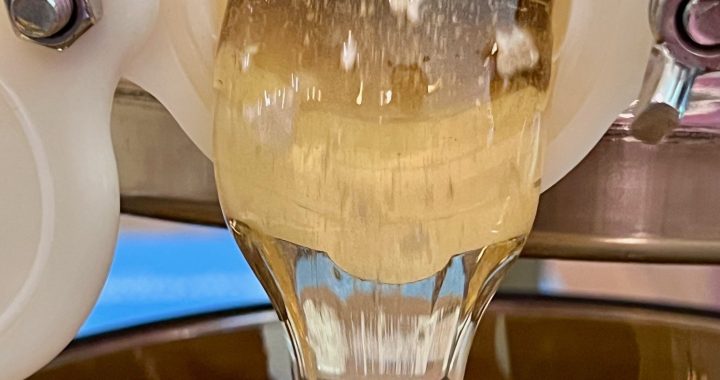
Eric actually used an electric extractor for 9 medium frames. It has about 16 speeds. Independent from manual or electric, take a few minutes to build up speed. Eric prefers plastic as wax foundation tends to burst at top speed. He would let the extractor run for 10 minutes, slow it down to a stop then reverse the spin direction for a few minutes more. Depending on the balance, top speed is not always required.  With wax foundation, he’d never go top speed.

Check the tank from time to time as the honey may rise to the point where the frames are in the honey. Before this happens, it is advisable to drain the honey for the next spin.

Adding supers

The snow is [long] gone and the spring blossoms have been a welcomed arrival for the honeybees.  The hives seem to be finding abundant sources of pollen and nectar in the area and it’s a joy to see the different colors of the pollen being stored in the honeycomb.

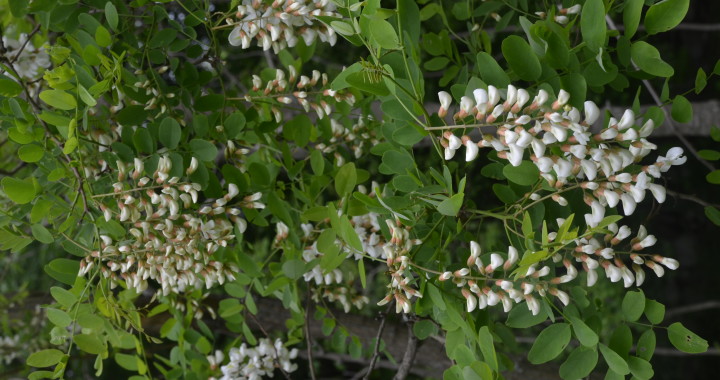
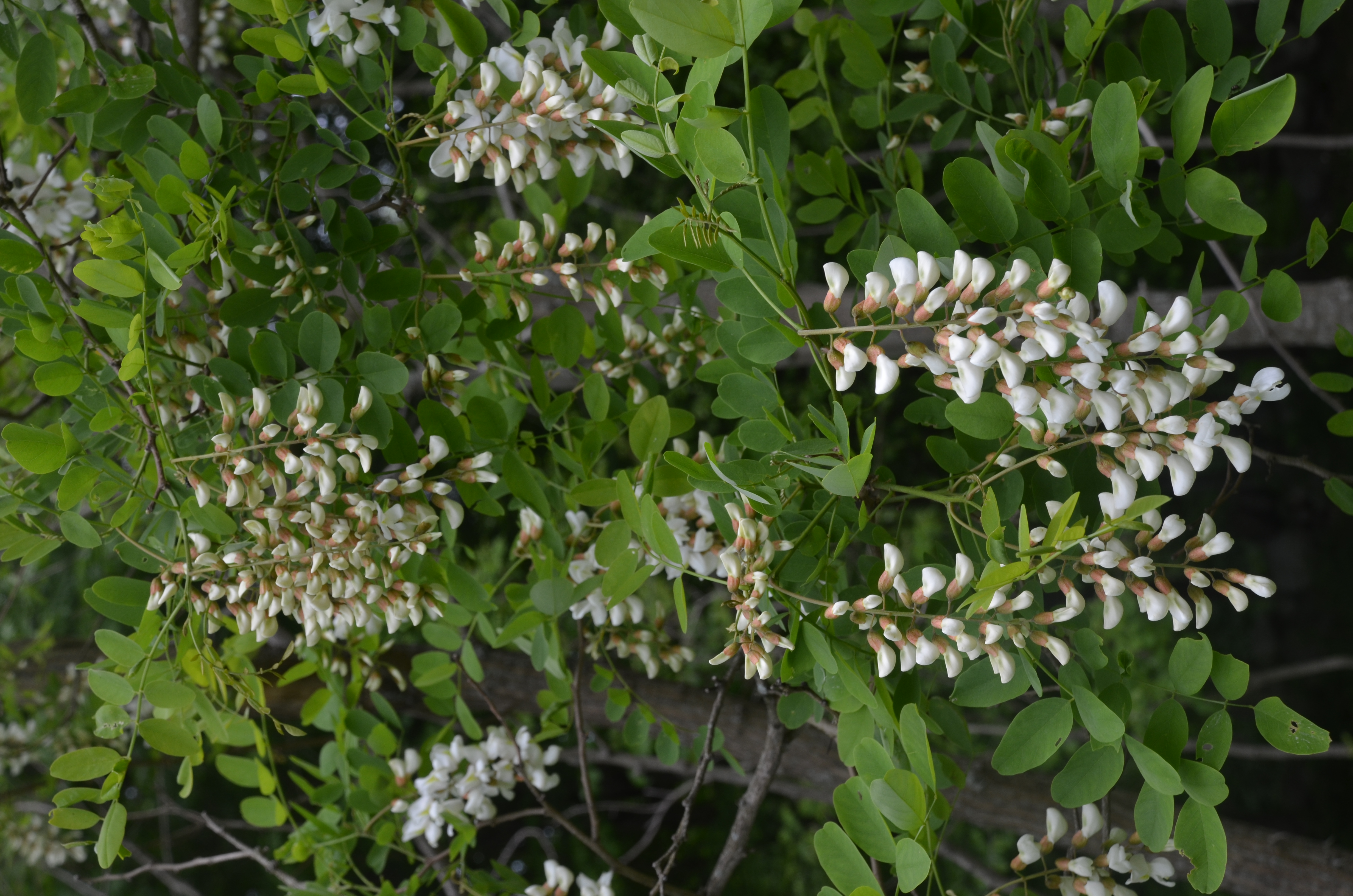
Locust blossoms, ready to open

Locust blossoms, ready to open

It’s also wonderful to see that the bees are bringing in nectar and curing honey in their brood chambers to be consumed later.  It is a great sight when the frame has its arc of honey, followed by an arc of pollen followed by capped brood, larvae and eggs!  The queen is laying well and the workers are actively working the hive to its fullest.

So it’s no wonder that it’s time to add a super for the next brood chamber, and, if really lucky or off to an earlier start, a honey super!  This was my joy this week as I was able to add a second brood box to a hive that needed a little more time than the others and then a honey super on three hives that had already been working seven or eight frames in their second box.

I see that the locust trees are ready to burst open and I am hopeful that the bees will avail themselves of them as they are robust and really close to home.  I can’t wait to watch the hive continue to build its brood and its honey stores . . . with maybe a little extra for us!

-Karen