May 2025 | Package Installation

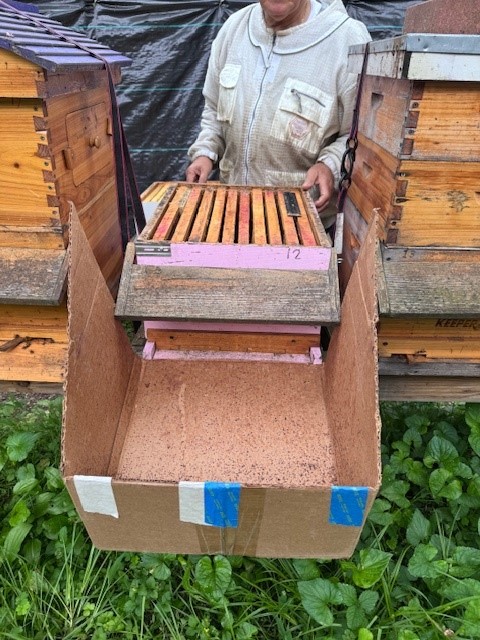
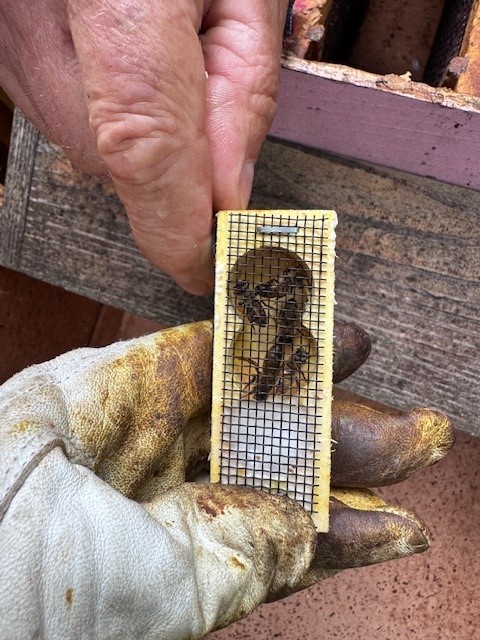
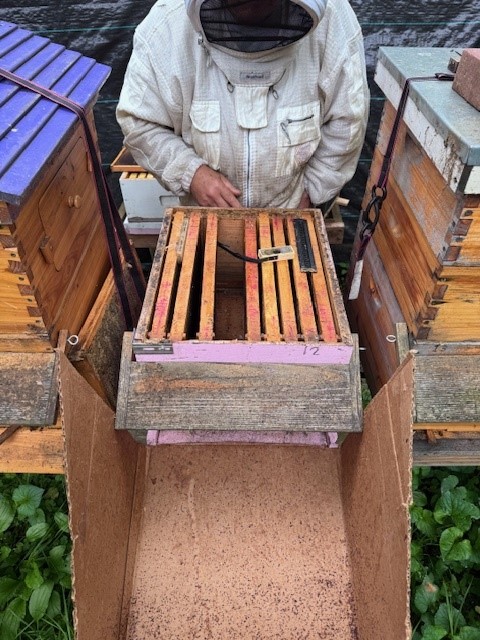
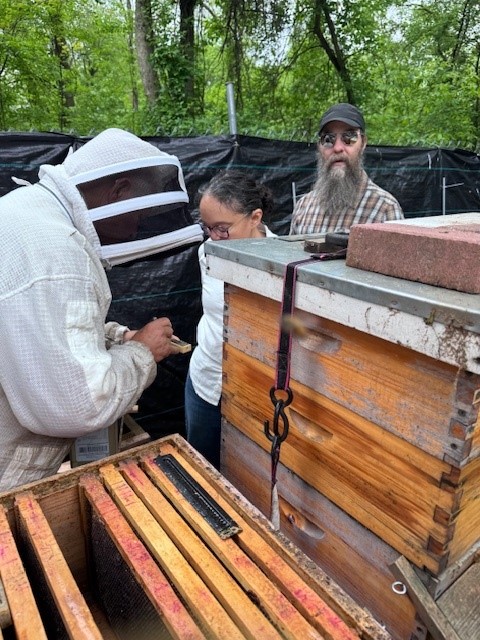
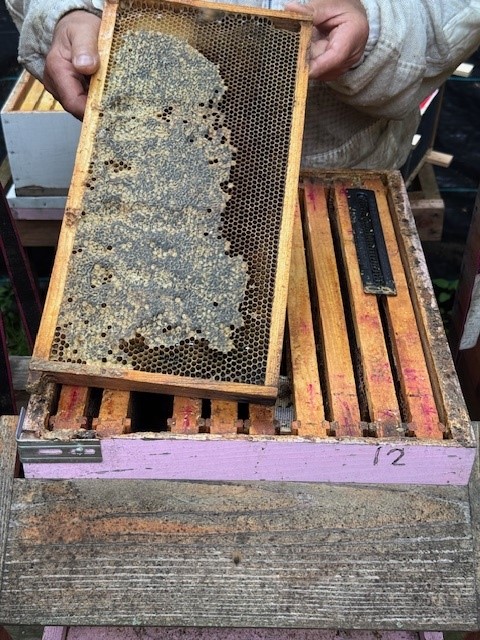
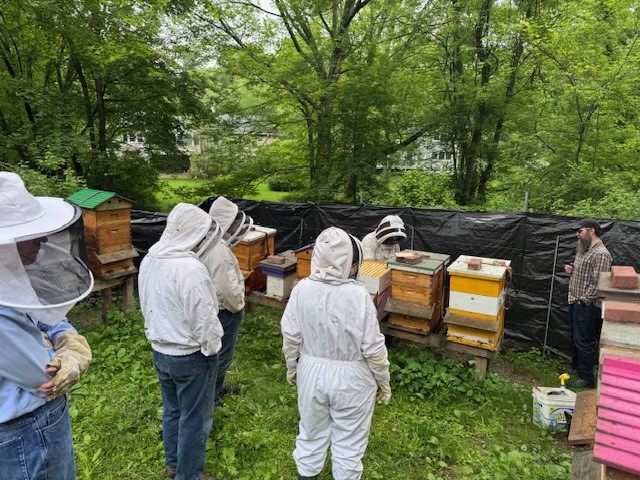
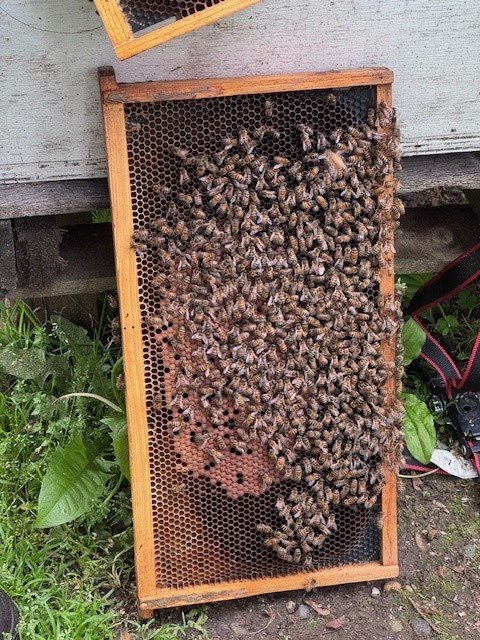
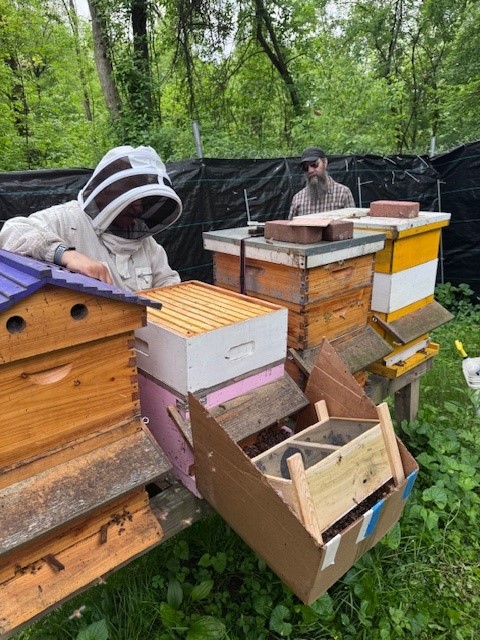
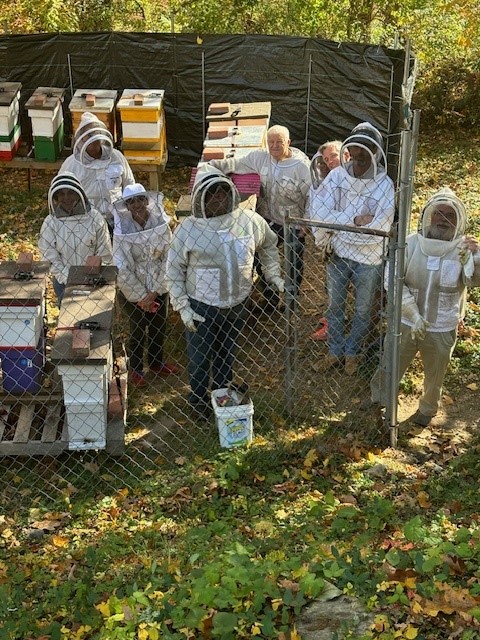
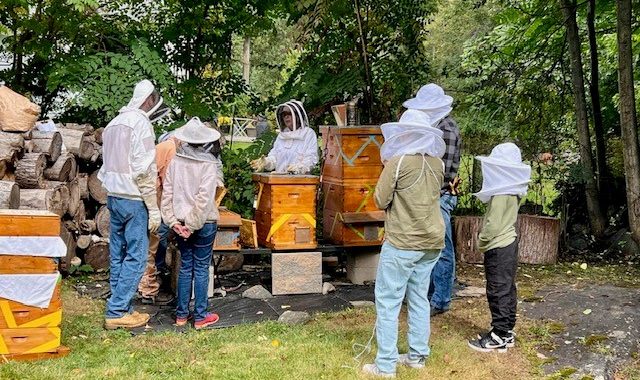
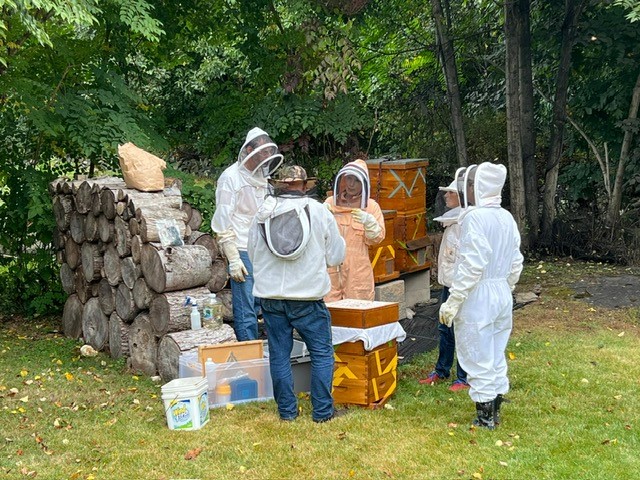
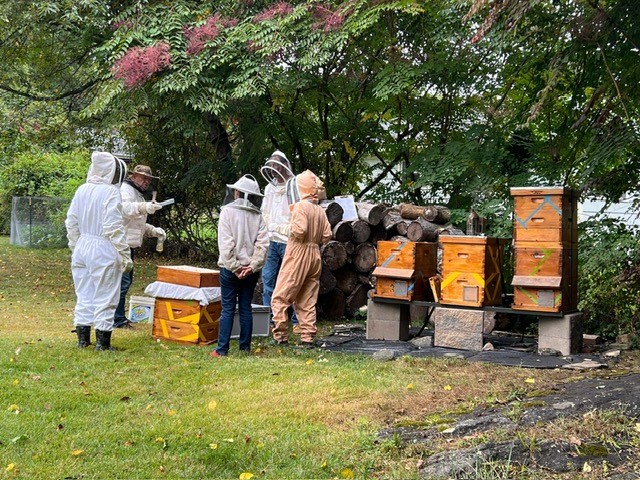
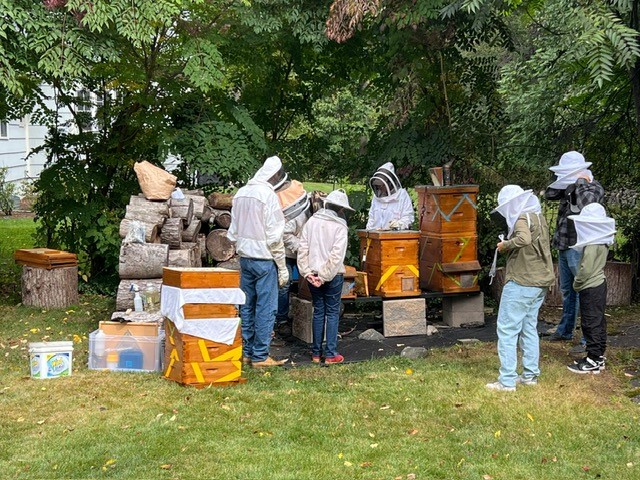
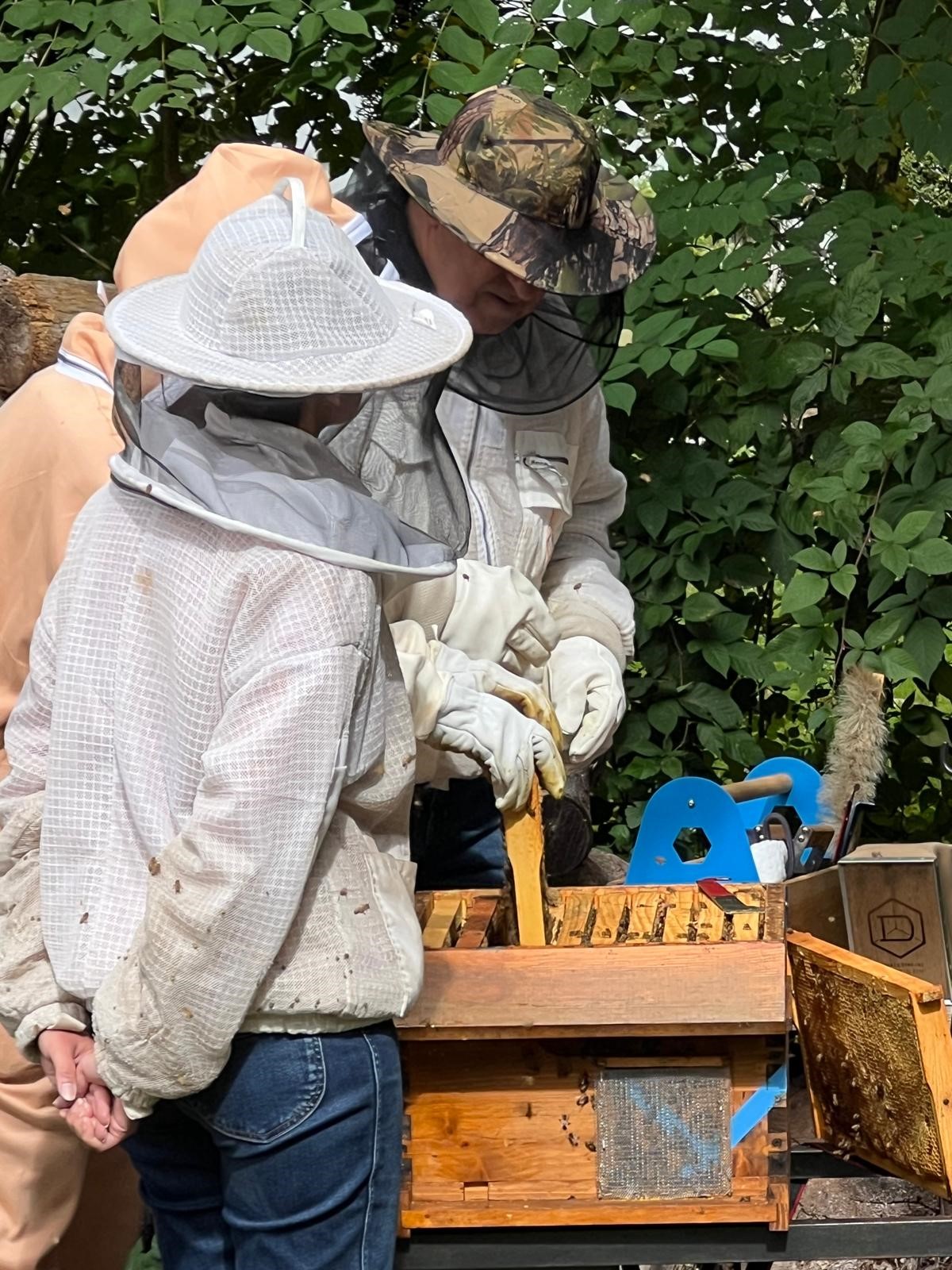
Sante once again welcomed us to his fantastic beeyard. He also experienced quite a few deadouts over the winter and showed us how he installs a package of bees. One particularly interesting feature is the setup in front of the hive — after shaking most of the bees into the box, he places the package in front of the entrance so the remaining bees can walk in on their own. The advantage: dead bees are left behind.

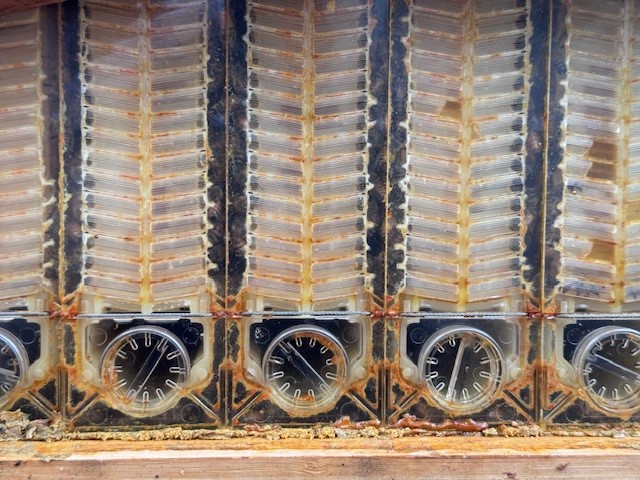
We also took a close look at the Flow Hives with great interest — maybe there’ll be a meeting one day where we get to see the Flow Hive in action…

Winter 2024 | Winter prep, storage, bee stuff

The final meetings are taking place: Do the bees have enough winter stores? What’s the mite count? Do I need to treat? Should I add insulation? — So many questions, especially if you’re new to beekeeping.

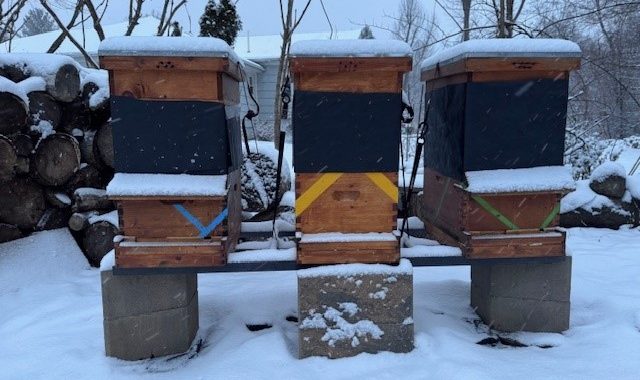
Sante is a very experienced beekeeper. He showed us how he insulates the hives using the inner cover, and how he treats with oxalic acid. Feeding is still done with syrup; when it gets colder, he switches to fondant or sugar dough.

As a general guideline: oxalic acid treatment is typically done around Thanksgiving, once the first night frosts have hit and the queen has stopped laying (ideally).

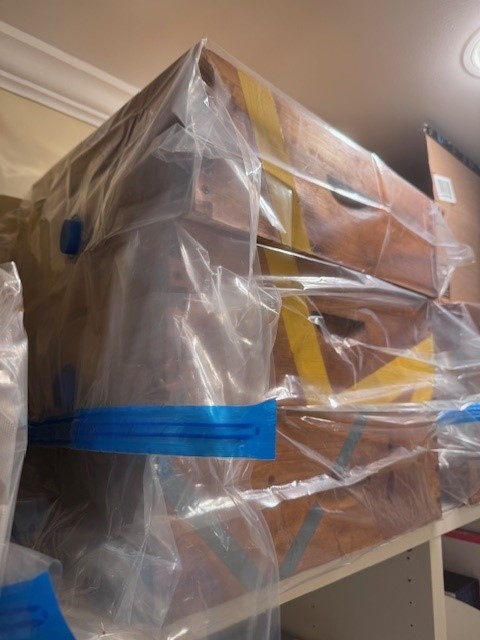
Also attached is an idea for storing honey supers: I froze them for 2–3 days and then sealed them in vacuum bags. Over the winter, it’s a good idea to check on them occasionally to make sure everything is still okay.

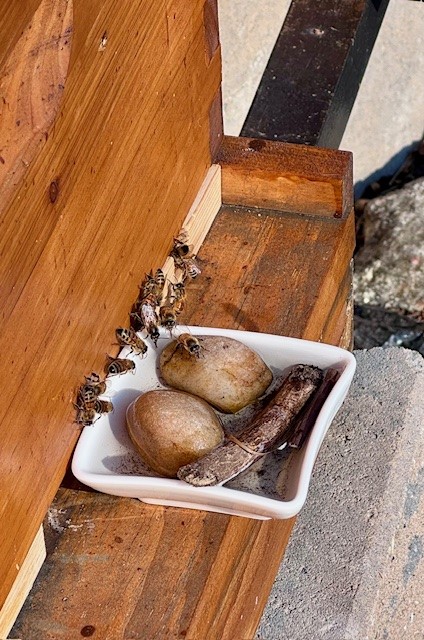
On a warm winter day, feel free to set out some water for the bees — they’ll gladly take it.

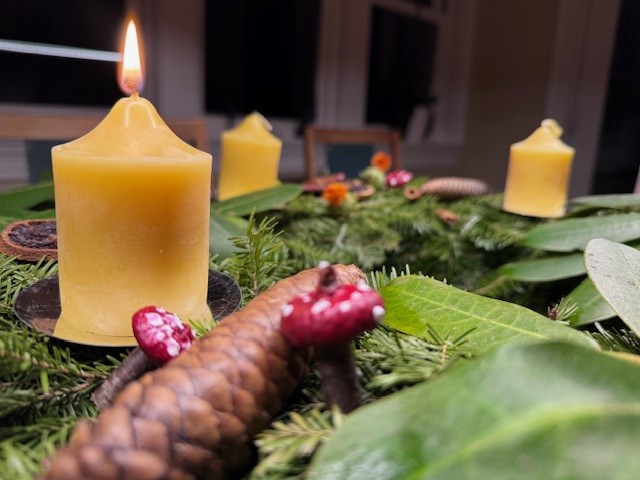
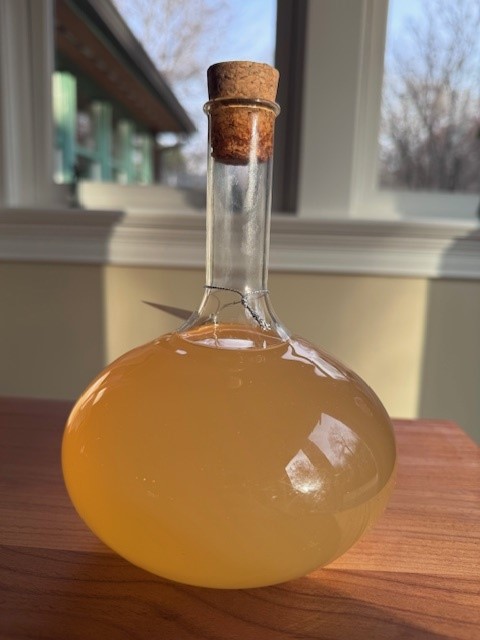
Now it’s slowly time to turn the wax into candles or creams — and who knows, maybe someone’s up for making a batch of honey liqueur?

2024 | September – What’s next after honey harvest?

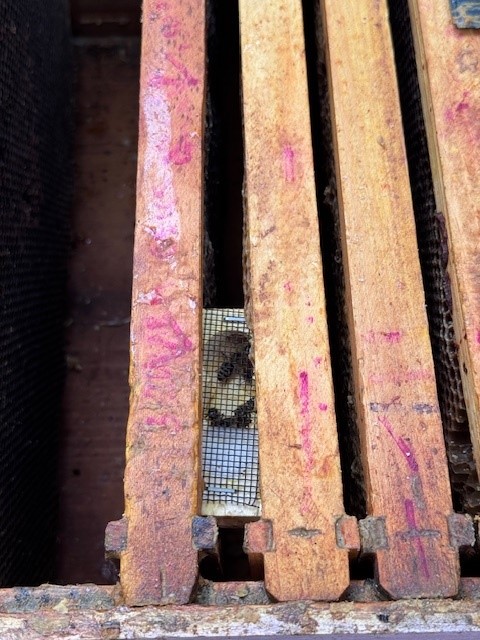
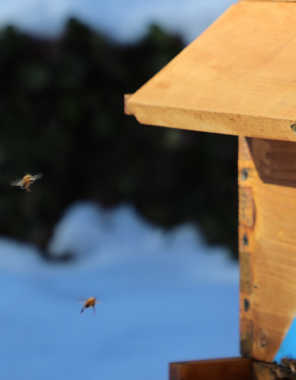
After the honey harvest, the season’s over? Well, not quite — the winter prep season is just beginning: the bees need to be fed, treated for mites, and protected from robbing (that’s what the little square at the entrance is for). Good thing if you already let them clean out the empty honeycombs earlier — it would be tricky to do that now.
Meeting in Hartsdale at Julie’s, NY.

2024 | July Meeting – Honey Extraction

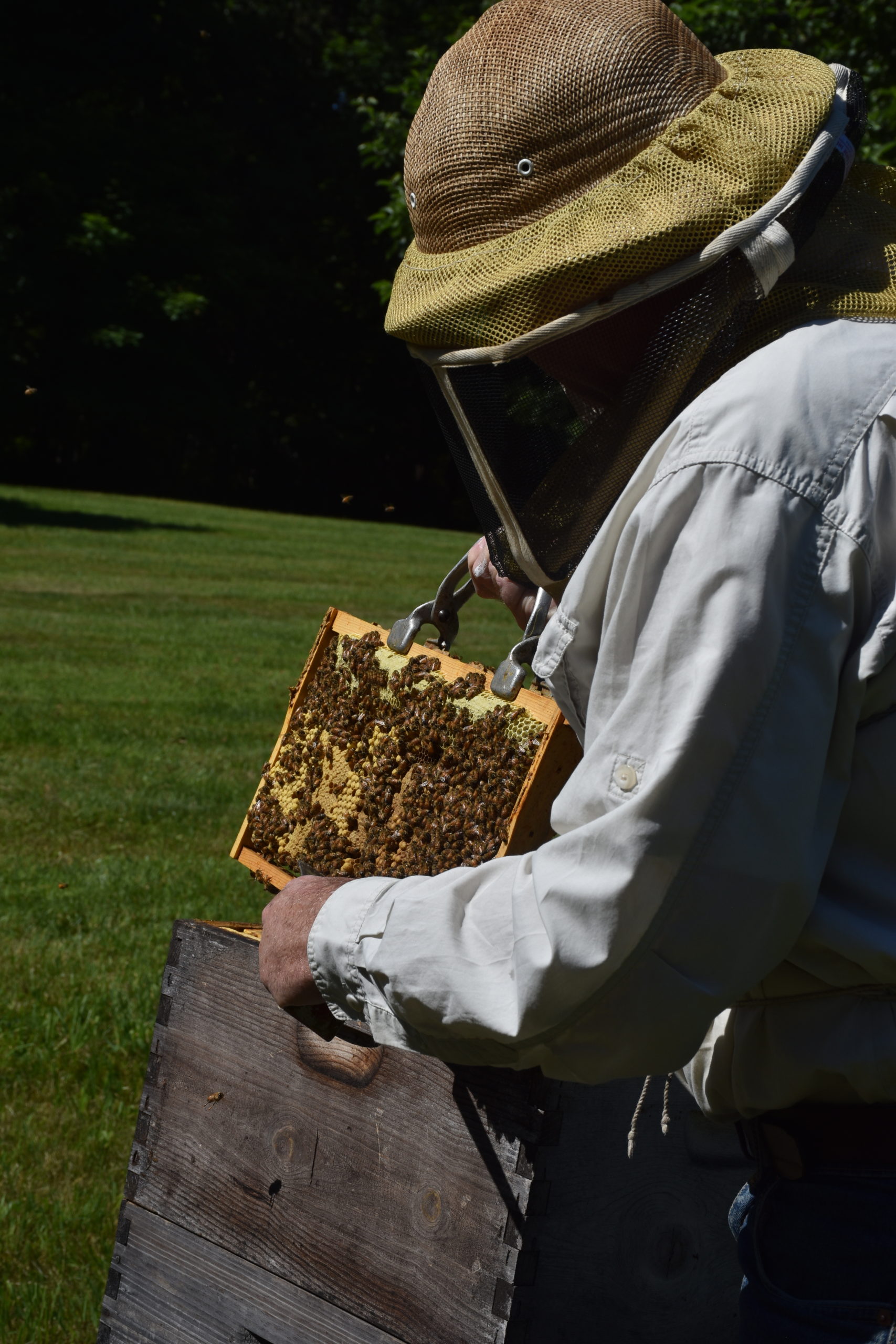
Eric is our beekeeping pro and there is almost no tool he doesn’t have. He invited us to see how he extracts honey. This is an example of a more convenient way to harvest honey, especially if you have a lot of hives to take care of.

How to remove bees from honeycombs?

There are some tricks that beekeepers can use to remove bees from their honey supers, such as working with a fume board, but be very careful and read the instructions to avoid a nasty surprise with your honey. Eric sprayed a liquid bee repellent on the felt inside the board. The bees do not like the smell and most of them would leave the hive within 10 minutes.

There are also several bee escapes (diamond, triangle) that you can buy or quickly build yourself that will empty the honey supers over night.

How do I uncap the honeycomb?

Eric runs his frames through an uncapping machine that works really fast with little impact on the structure. You won’t have a lot of wax with this method. If you just have a few hives, the uncapping knife and a uncapping fork will work great.

Honey extraction

Eric actually used an electric extractor for 9 medium frames. It has about 16 speeds. Independent from manual or electric, take a few minutes to build up speed. Eric prefers plastic as wax foundation tends to burst at top speed. He would let the extractor run for 10 minutes, slow it down to a stop then reverse the spin direction for a few minutes more. Depending on the balance, top speed is not always required.  With wax foundation, he’d never go top speed.

Check the tank from time to time as the honey may rise to the point where the frames are in the honey. Before this happens, it is advisable to drain the honey for the next spin.
2024 | April Meeting – Hive Split

We had a wonderful in-person meeting on April 27. Sante invited us to participate in a hive split at his apiary. There were two beekeepers present who were 9 and 10 years old, great job!

Unfortunately, the participants were not able to follow the meeting online, as the reception was simply too poor. What was left of the data is attached with a revision and additional information.

Beekeepers are having a very busy time at the moment. The swarming season has just started. Please check your colonies weekly for swarm cells (usually at the bottom of the frames). Give the colonies space so that they can have other things on their minds than looking for a new place to stay…

Here is a useful link if you want to report a swarm and need assistance  https://nocobees.org/report-swarm/ .

2024 | February and March Meetings – Online

Since the bee season had not yet started, we met digitally in 2 online workshops in February and March and brought our knowledge together.

Winter prep

The final treatment against Varroa around Thanksgiving seems to be particularly important for the survival of bees in winter, as is feeding.

If you want to take an academic approach, weigh your equipment – I have also started doing this and will add my work-in-progress-list in the photo galery.

If the bees consumed around 6.6pd per month, you should feed 5.2gal from August to October. On warm winter days, you can use the weight check (tilt check) to determine how much feed has been consumed and feed more if it is really necessary.

Perhaps there is someone who would like to do this with me next winter. I’ll keep you posted.

Spring Clean-Up

Last but not least we talked about spring clean-up, especially removing old dark combs and varroa control with drone frames.

To do this, place an empty frame with a bar in the middle in position 3 (see picture) in the hive. This division will allow you to cut out the more developed comb sooner. Remember that mites prefer drone brood for egg laying. Forgetting to cut out the drone combs can significantly increase the Varroa population.

2024 | January Meeting – Mead Workshop

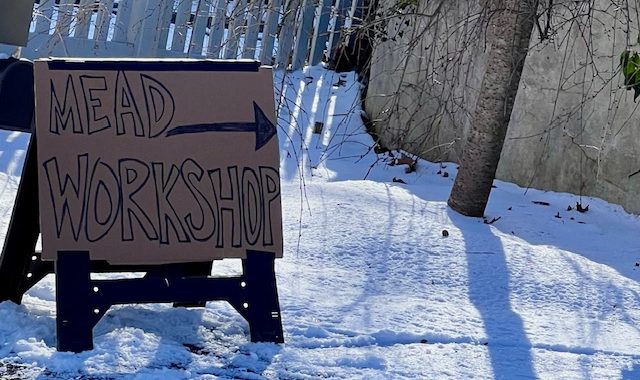
We were very excited to have Jody Hankins as our host to share her recipe and techniques for making mead for our January 2024 HVNB meeting.

Jody introduced us to two contrasting flavors, one very dry and one very sweet wine, which we were invited to taste to see what the extreme results might be. It was delicious.

We also learned that different batches of honey give the mead different flavors from year to year. So, it is likely that mead tastes different depending on the harvest and location.
During the workshop, Jody took us through the mead making process and explained how to control the sweetness or dryness of a wine. Now it just needs to sit and ferment.

If you make mead, please let us know how it turned out. My equipment just arrived and I’m ready to go. Anyone want to join in? Stay tuned, maybe we’ll be able to taste the first results this fall!

Below is a list of the equipment and Jody’s recipe.

Essential equipment

  • Buckets/carboys/other vessel for mixing and storing
  • Hydrometer – for measuring potential alcohol
  • Yeast
  • Sodium metabisulfite or Campden tablets (for sanitizing)
  • Any additives for the mead recipe you plan to use
  • Fermentation airlock
  • Auto siphon with a pinch clamp for racking off and bottling

Optional equipment

  • Wine thief (to move liquid for ease in sampling)
  • Clear graduated cylinder or tall glass for taking hydrometer measurements (you will need at least 5-6 inches height of liquid in order to take a proper measurement with the hydrometer – it needs to float)

Jody’s basic mead recipe 

It will take approximately 2-3 lbs of honey per gallon for the starting solution depending on the desired potential alcohol

For each gallon of honey/water at 11% potential alcohol, add to batch for fermentation

  • 1 tsp. yeast nutrient (I typically divide this and add half immediately, second half added 2 days after fermentation starts)
  • 1 tsp acid blend
  • 1 ½ tsp citric acid
  • ¼ tsp tannin
  • Yeast (1 package of yeast is sufficient for up to 5 gallons, my favorite yeast is a wine yeast Lalvin brand D47)

Optional: Prior to bottling/storing add ½ tsp potassium sorbate per gallon to inhibit further fermentation

Yield: 1 gallon batch of mead will yield approximately 5 bottles of wine (750 mL is the standard wine bottle volume)

Let’s stay connected and join our newsletter for more information.

Happy New Year, beekeepers!

You can have a say in what we will talk about in February.

As we embark on a new chapter with fresh leadership, we are eager to strengthen our connection with each of you.

To facilitate this, we’ve designed a survey covering diverse topics that could shape the structure of future meetings, workshops, or introduce new discussion themes for the upcoming year(s). We’re enthusiastic about uncovering the wealth of expertise within our community (which is one of the largest in NY state!) and warmly invite those willing to share their knowledge. Please take a minute to share your input with us.

January survey

Please, don’t be shy – your support is vital to keeping our meetings vibrant.
Your insights play a pivotal role in shaping the trajectory of our club.

Survey results will be highlighted in our next newsletter. Thank you for your active participation, and let’s collectively shape the future of HVNB together!

This survey will be closed by end of January 2024. 

2021 | May Beekeepers Meeting

Andy will walk us through a hive split!

We hope you’ll join us for our next beekeepers meeting, Saturday, the 15th.

It’s on Zoom and live on Facebook, starting at 10:30am.

Abbott has volunteered to demonstrate hiving his new nucs and Andy and Eric will walk us through hive splits.

Thanks to Gabriella, we have a great event host and she will monitor the chat for questions to ask of our beekeepers.

We hope you’ll join us!

Best Laid Plans . . .

So we tried to be all organized and set up the year’s worth of Beekeeper meetings in advance.

We all know how that worked out!

Not to be deterred, we are going to have a ‘virtual’ beekeepers meeting using the Zoom platform.

See the details here.

We hope to ‘see you there’!

To get the full details, be sure to sign up for our email list and we’ll send out all of the information towards the end of the week.